

Let’s be completely honest for a second. If you manage trucking operations for a small or mid-sized fleet, your phone is probably an active war zone. Between fluctuating fuel prices, tight margins, and sudden supply chain disruptions, you are constantly putting out fires.
But there’s one silent killer of productivity and driver morale that doesn’t get quite enough headlines: the absolute nightmare of finding a safe place to park a 53-foot rig at the end of an HOS (Hours of Service) shift. Every single day, your dispatchers and drivers are asking the same exhausting question: "Where can I find secure truck parking near me?"
It sounds simple enough, but as any seasoned ops leader knows, it’s a massive bottleneck. When drivers can't find reliable parking facilities, they are forced to make a terrible choice: risk an HOS violation looking for a spot, or park on an dark, unlit highway off-ramp or an abandoned shopping mall lot where cargo thieves are actively window-shopping.
For small and mid-sized fleets, these security risks and lost hours don’t just hurt; they can actively tank your profitability. Let’s break down why this problem is stalling your growth, what tools actually work, and how modern tech is completely changing the game for fleet managers.
The True Cost of the Parking Crunch
The Federal Highway Administration (FHWA) and major industry groups have pointed it out for years: there is a massive deficit of truck parking spaces relative to the millions of drivers on the road. For your trucking operations, this scarcity triggers a domino effect of logistics challenges:
- The Burned Clock: The average long-haul driver wastes roughly an hour of driving time every single day just looking for a spot. Multiply that across a 20-truck or 50-truck fleet, and you are bleeding thousands of dollars a week in unbilled driver hours and wasted fuel.
- Cargo Theft and Safety Hazards: Unsecured parking is a magnet for cargo theft. If your driver is forced to park on the shoulder of a highway or in a sketchy industrial park, your freight, your equipment, and your driver’s safety are completely vulnerable.
- Driver Turnover: Drivers hate the parking scramble. If your team is constantly stressed about where they are going to lay their head at night, they will jump ship to a fleet that actively handles the logistics for them.
To keep your fleet running smoothly, your dispatchers and drivers need a reliable mix of tech, strategy, and dedicated marketplaces to secure both short-term truck parking and long-term storage.
Traditional Solutions vs. Modern Realities
For decades, the standard playbook for finding truck driver parking relied on a mix of intuition, truck stop guidebooks, and sheer luck. While those methods still have a place, relying on them exclusively in today’s tight supply chain environment is a recipe for operational failure.
1. Enterprise Fleet Portals & Megachains
The massive truck stop chains (think Pilot Flying J, Loves, and TA/Petro) offer reserved parking programs.
- The Catch: These spots fill up hours in advance, and their platforms are often heavily geared toward mega-fleets with massive enterprise contracts. For small to mid-sized carriers, getting consistent, guaranteed access across a fluid route can be a bureaucratic headache.
2. Crowdsourced Over-the-Road Apps
Apps like Trucker Path have been a staple in the cab for years. They rely on drivers updating the app manually to report whether a lot is "Full," "Some Spots," or "Empty."
- The Catch: Crowdsourced data goes stale fast. A lot marked "Some Spots" at 4:00 PM could be completely packed by the time your driver arrives at 4:45 PM, leaving them stranded with a ticking HOS clock.
3. The Digital Marketplace Revolution (Enter FinPark)
Instead of crossing your fingers and hoping a spot is open, smart fleets are moving toward dedicated, on-demand parking marketplaces. This is where FinPark steps in as an absolute game-changer for small and mid-sized trucking operations.
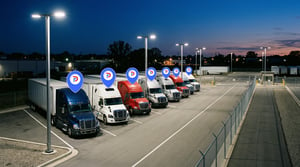
FinPark is a cloud-based, on-demand truck parking platform operating seamlessly across the United States and Canada. Rather than forcing drivers to hunt for spots manually, FinPark allows dispatchers and drivers to search, reserve, and pay for guaranteed parking in real time via a mobile app or browser.
How to Choose the Right Parking Solution for Your Fleet
Not all parking apps or lots are created equal. When evaluating how your operations team tackles the question of "Where is the best truck parking near me?", look for platforms that satisfy the following strict criteria:
Real-Time Availability & Reservation Guarantees
If a tool doesn’t offer a concrete reservation guarantee, it isn’t solving your problem; it’s just digital guesswork. You need a platform that lets you lock down a spot in advance so your driver can roll right in without wasting an hour idling.
Verified Security Infrastructure
A chain link fence from the 1980s doesn't cut it anymore. High-quality platforms like FinPark ensure their listed reliable parking facilities are strictly vetted by risk management teams. You should actively look for listings that detail specific security features:
|
Essential Security Features |
Why It Matters for Your Fleet |
|
Physical Perimeter Fencing |
Acts as the primary deterrent against casual intruders and cargo thieves. |
|
HD Security Cameras (CCTV) |
Provides visual accountability and documentation in case of insurance claims. |
|
Gated Access Controls |
Ensures only authorized drivers, assets, and personnel can enter the yard. |
|
Bright LED Lighting |
Eliminates blind spots and drastically reduces the likelihood of break-ins or accidental yard accidents. |
Versatile Equipment Support
Your fleet might not just be standard 53-foot dry vans. You might run sprinter vans, box trucks, flatbeds, straight trucks, or ocean containers. Standard truck stops aren't built to house diverse equipment or handle drop-and-hook trailer tracking. Marketplace solutions give you visibility into yards that specialize in exactly what your fleet hauls.
Step-by-Step: Building a Bulletproof Fleet Parking Strategy
If you want to eliminate parking chaos, stop leaving it up to the driver at the 11th hour. Your dispatch and operations team should integrate parking directly into your route planning workflow. Here is how to execute it seamlessly:
1.Analyze Route Bottlenecks:Pre-Trip Planning.
Identify high-density freight corridors or major metro areas (like Atlanta, Chicago, or Northern New Jersey) where your drivers consistently struggle to find parking. Don't let them enter these zones without a parking plan.
2.Deploy Dedicated Parking Marketplaces:Tech Integration.
Equip your dispatchers and drivers with platforms like FinPark. Instead of searching for generic "truck stops," have your team use the browser portal or mobile app to view certified, secure yards along the specific shipping lane.
3.Book Early (Short-Term & Long-Term):Execution.
For standard over-the-road runs, book short-term truck parking or overnight slots early in the morning when availability is highest. If your fleet frequently services a specific regional hub, look into monthly or long-term yard storage options to establish a permanent regional footprint.
4.Track Savings & Retention:Post-Trip Review.
Monitor your fuel burn, unbilled driving hours, and driver feedback. Drivers who use dedicated booking marketplaces save an average of one hour of search time per day—that is an hour of extra productivity back into your business.
Why Solving the Parking Problem Protects Your Bottom Line
When you streamline how your team finds truck driver parking, you aren't just checking an operational box—you are executing a high-impact business strategy.
1. Mitigating Supply Chain Disruptions
When a driver runs out of hours and has to park miles away from their destination because nearby lots are full, your delivery window misses the mark. By utilizing guaranteed, reservable spaces near major manufacturing centers or ports, your fleet can stage trailers precisely where they need to be, bypassing traffic and unexpected delays.
2. A Massive Weapon for Driver Retention
In a highly competitive labor market, drivers talk. They know which fleets leave them out to dry at the end of a long shift, and which fleets actively invest in their safety and peace of mind. Giving your drivers access to an on-demand booking tool like FinPark shows your team that you respect their time, their comfort, and their safety.
3. Lowering Overhead and Asset Damage
An idle truck burning diesel while searching for a spot is literally burning your profit margins. Furthermore, tight, overcrowded public lots are hotbeds for minor asset damage—scraped fenders, broken mirrors, and backed-into grilles. Secure, managed yards give your drivers plenty of turning radius and dedicated space, drastically reducing accidental yard damage claims.
Stop Hunting. Start Booking.
The era of telling your drivers to "just find a spot along the highway" is officially over. The digital age has brought transparency, security, and predictability to truck parking logistics.
By equipping your trucking operations with specialized tools and leveraging tech-forward platforms like FinPark, you take the guesswork completely out of the equation. Your drivers get a safe, verified place to rest, your cargo stays locked down tight, and your dispatchers can finally focus on scaling your business instead of tracking down empty pavement.
Don't wait for a costly cargo theft or a forced HOS violation to fix your parking strategy. Turn parking from any daily headache into a competitive advantage for your fleet today.