

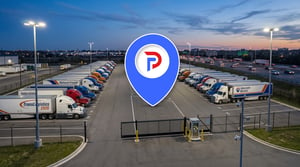
The freight industry in 2026 operates on thinner margins, stricter delivery windows, and heightened driver safety expectations than ever before. Yet, fleet managers across North America continue to battle a chronic, costly, and systemic bottleneck: the severe shortage of designated, safe truck parking spaces.
According to data from the American Transportation Research Institute (ATRI) and the Federal Highway Administration (FHWA), there is still only one designated truck parking space for every 11 long-haul drivers on the road. Drivers spend an average of 56 minutes per day searching for a legal, secure spot—time that directly burns through legally mandated Hours of Service (HOS) driving limits.
For fleet operators managing anywhere from 10 to 1,000+ power units, this equates to a massive financial drain. Unplanned downtime, increased fuel consumption from unauthorized circling, cargo theft risk, and driver turnover directly stem from fleet parking challenges.
Solving this crisis requires moving away from legacy "park-and-pray" mentalities. Fleet leaders are now leveraging technology, strategic asset placement, and on-demand parking platforms to lock down truck parking access, secure their assets, and restore predictability to their supply chain networks.
The True Operational and Financial Impact of Parking Scarcity
The parking crisis is rarely just an inconvenience for the driver; it is an operational tax on the entire trucking enterprise. When drivers reach the limit of their 11-hour driving window without a confirmed space, the resulting downstream effects reverberate through dispatch, safety compliance, and financial management.
THE PARKING SHORTAGE RIPPLE EFFECT
1. DRIVER FATIGUE & RETENTION ➡️ High stress, lost miles, increased turnover
2. HOS COMPLIANCE RISKS ➡️ Violations, roadside out-of-service orders
3. CARGO THEFT & LIABILITY ➡️ Unsecured shoulder/lot parking, claims spikes
4. UNPLANNED FUEL WASTAGE ➡️ Idling and circling burns 1-2 gal/day extra
5. BROKEN DISPATCH ETAS ➡️> Missed receiver windows, detention penalties
1. Financial Drain & Lost Revenue Potential
When a driver is forced to shut down early to lock in an available space—often 1 to 2 hours before their HOS clock runs out—that power unit loses revenue-generating miles. ATRI estimates that searching for parking costs motor carriers $4,000 to $6,000 per driver annually in lost productivity. Multiplied across a fleet of 50 trucks, that represents a $200,000 to $300,000 annual leak in revenue.
2. Driver Turnover and Retention
Truck driver retention remains one of the highest cost centers for motor carriers. Parking uncertainty is consistently ranked by professional drivers as one of their top workplace stressors. Forcing drivers to park on dark highway ramps, unlit shoulders, or abandoned lots degrades their quality of life, increases fatigue, and drives experienced operators away from long-haul routes.
3. Skyrocketing Cargo Theft & Dwell Vulnerability
Unsecured staging locations are primary targets for organized freight theft rings. In 2026, cargo theft trends indicate a sharp increase in targeted attacks on unattended trailers parked in public turnouts or unmonitored lots. When carriers cannot guarantee secure truck parking with perimeter fencing, access controls, and surveillance, they expose high-value freight to severe risk, leading to skyrocketing insurance premiums and claims disputes.
4. Disrupted Trailer Parking Availability for Drop-and-Hook Operations
Modern supply chains rely heavily on drop-and-hook logistics, where power units drop loaded or empty trailers at designated locations and immediately pick up new loads. Without guaranteed trailer parking availability at strategic interchanges, carrier networks freeze. Trailers end up parked in unauthorized spots, creating yard congestion, missing asset tracking updates, and incurring steep yard storage fees.
Macro Context: Freight Transportation Infrastructure Gaps in 2026
Understanding why the shortage exists helps fleet leaders craft effective countermeasures. The issue stems from structural friction points within national freight transportation infrastructure:
|
Infrastructure Bottleneck |
Core Impact on Fleet Management |
Strategic Countermeasure |
|
Public Rest Area Saturation |
State-run rest stops fill up as early as 4:00 PM along major corridors (I-10, I-80, I-95). |
Deploy real-time digital parking reservation platforms. |
|
Metropolitan Zoning Barriers |
Urban centers actively restrict industrial truck parking, creating "parking deserts" near major distribution hubs. |
Secure off-site staging hubs in sub-urban perimeter zones. |
|
Increased Freight Volume |
Higher consumer demand and just-in-time manufacturing increase truck counts without expanding pavement. |
Shift from public highway reliance to private network access. |
|
Stagnant Federal Infrastructure Expansion |
Public construction of new mega-sites takes years due to environmental and budgetary approvals. |
Utilize modern digital marketplaces (e.g., FinPark) to unlock existing private spaces. |
While public policy initiatives—such as the federal funding allocations under recent DOT transportation spending bills—are allocating millions toward building physical spaces along key freight corridors, public infrastructure development moves slowly. Fleets cannot afford to wait five years for concrete to dry; they require immediate operational fixes today.
Strategic Framework: How Fleet Leaders Can Solve Parking Shortages Today
To overcome trucking operations issues stemming from parking scarcity, fleet executives are combining proactive policy changes, driver empowerment tools, and modern software solutions.
Strategy 1: Transition from "Reactive Hunting" to Pre-Booked Reservations
The traditional model of letting drivers look for parking when their 30-minute ELD warning sounds is mathematically flawed in high-density freight corridors. Leading fleet operators are institutionalizing pre-booked parking as standard operating procedure (SOP).
By treating truck parking spots with the same booking discipline as airline seats or warehouse dock appointments, dispatchers ensure that drivers know exactly where they will rest hours before they arrive. This eliminates terminal anxiety and eliminates wasted fuel spent circling off-ramps.
Strategy 2: Integrate Real-Time Parking Data into Route Planning
Modern Transportation Management Systems (TMS) and fleet telematics platforms must sync directly with real-time parking data feeds. Instead of routing a driver solely based on fuel stop discounts or shortest miles, route planning algorithms should evaluate parking availability along the corridor during the driver’s anticipated rest window.
If data shows that public rest stops along a specific stretch of I-75 fill to 100% capacity by 5:30 PM, the navigation system can direct the driver to a reservable private location nearby, preventing an unwanted HOS breach.
Strategy 3: Deploy Dedicated On-Demand Parking Marketplaces (FinPark)
The most significant operational shift in 2026 is the rapid adoption of digital freight parking marketplaces. Leading this transformation is FinPark, an end-to-end cloud-based platform that connects motor carriers, drivers, and fleet managers directly with verified, secure truck parking facilities across the United States and Canada.
By consolidating fragmented private yards, fleet terminals, and commercial parking spaces into a unified platform, FinPark gives dispatchers and drivers instant truck parking access. Rather than leaving drivers to navigate overcrowded truck stops, fleets use FinPark to search, reserve, and pay for guaranteed spots in advance.
Key operational benefits of leveraging platforms like FinPark include:
- Guaranteed Spots: Eliminates guesswork by securing a reserved space before the driver departs or during transit.
- Enhanced Asset Security: Locations listed on FinPark undergo risk management screening, offering clear visibility into security features like perimeter fencing, gated access, 24/7 security personnel, and lighting.
- Trailer & Container Storage: Beyond power-unit parking, fleets can secure short- or long-term trailer parking availability, making drop-and-hook staging effortless across major logistics markets.
- Time Savings: Drivers who utilize FinPark's network save an average of one hour per day, translating into direct drive-time recovery and reduced fuel burn.
Strategy 4: Optimize Trailer Staging and Drop Yard Networks
For fleets operating dedicated routes or high-frequency relay networks, establishing secure trailer drop yards near major freight hubs is crucial. Leaving unattached trailers at customer facilities or unmonitored lots creates severe liability.
By utilizing cloud platforms to secure short-term or monthly yard leases, carrier operations teams can establish regional micro-hubs without committing to long-term industrial real estate capital expenditures. This flexibility allows fleets to scale their footprint up or down based on seasonal freight demand.
Financial ROI: Reserved Parking vs. Free/Unplanned Parking
Many carrier CFOs and fleet managers ask: "Does paying a daily reservation fee for truck parking actually yield a positive return on investment?"
A cost-benefit analysis demonstrates that paying for guaranteed secure truck parking provides immediate operational savings.
ROI Breakdown: Single Driver / Single Month
|
Operational Factor |
Unplanned "Free" Parking Model |
Proactive Reserved Parking Model (e.g., via FinPark) |
|
Daily Search Time |
56 minutes wasted/day |
0 minutes wasted |
|
Monthly Lost Driving Miles |
~800–1,100 lost miles |
0 lost miles (reclaimed for driving) |
|
Unproductive Fuel Burn (Circling/Idling) |
~180–250 / month |
~$0 |
|
Risk of HOS Violation Fine |
High (500–2,500 penalty potential) |
Zero (Arrive on schedule at reserved spot) |
|
Average Monthly Parking Cost |
$0 upfront (High hidden costs) |
~300–450 (Reservations @ ~15–20/night) |
|
Estimated Revenue Recovered |
$0 |
$1,200 – $1,800 / month |
|
NET FINANCIAL IMPACT |
-400to-600 Net Loss |
+800to+1,350 Net Gain per Truck |
The math is clear: The cost of searching for parking far exceeds the cost of paying for a reserved space. Reclaiming 50+ minutes of driving time per day easily generates enough billable mileage to cover reservation expenses while protecting fleet drivers and cargo.
Actionable Checklist for Fleet Managers & Dispatchers
To resolve fleet parking challenges and streamline day-to-day operations, logistics teams can implement this 5-point action plan:
AUDIT HIGH-RISK CORRIDORS : Analyze telematics data to identify where drivers lose the most HOS time searching for parking (e.g., I-95, I-10, LA Basin, Chicago Metro).
EQUIP DISPATCH WITH RESERVATION TOOLS: Provide dispatch teams with central accounts on platforms like FinPark so they can pre-book parking during load assignment.
UPDATE FLEET PARKING POLICIES: Establish clear guidelines mandating that high-value cargo (pharmaceuticals, electronics) MUST be parked in vetted, gated locations with 24/7 security.
TRAIN DRIVERS ON SELF-SERVICE APPS: Empower drivers with intuitive mobile apps to locate and reserve verified spots on the fly when traffic delays alter their original transit schedules.
REVIEW MONTHLY REVENUE & SAFETY GAINS: Track retention rates, HOS compliance scores, and driving hour utilization to measure ROI across your reserved parking program.
The Outlook for Freight Infrastructure and Fleet Technology
As the freight ecosystem progresses through 2026 and beyond, solving the parking shortage will rely on a blend of physical infrastructure investment and digital innovation.
Federal initiatives like the Department of Transportation’s multi-million dollar parking expansion grants are adding crucial physical capacity along major Interstate bottlenecks. However, physical concrete alone cannot keep pace with dynamic freight patterns. The future lies in digital orchestration—where telematics, automated dispatching, and platforms like FinPark work together seamlessly to create a connected, friction-free parking ecosystem.
Fleet managers who take charge today by equipping their dispatchers and drivers with real-time truck parking access will not only safeguard their cargo and compliance—they will secure a distinct competitive edge in driver retention and operational efficiency.