

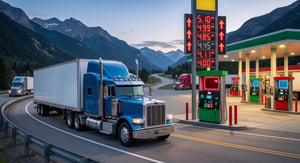
Operating a motor carrier in North America has always been a balancing act of tight margins, labor demands, and shifting regulatory frameworks. However, few operational variables create immediate shockwaves throughout a fleet’s balance sheet quite like fuel cost volatility.
According to data released by the U.S. Energy Information Administration (EIA), the national average on-highway diesel price surged to $6.529 per gallon as of late September 2026, while Canadian retail diesel prices spiked sharply past $2.00 CAD per liter in key corridors. When fuel costs climb to these levels, diesel rapidly transforms from a standard operational expense into a primary threat to carrier solvency and bottom-line profitability.
Standard fuel surcharges rarely offset this level of immediate cash flow burn, leaving operational leaders scrambling to squeeze efficiency out of every mile, every asset, and every dollar of working capital.
For fleet managers and operations leaders, navigating high fuel prices requires moving beyond conventional fuel-saving tactics like speed limiters and idle reduction. It demands a holistic restructuring of asset utilization, capital expenditure, and route planning.
The Ripple Effect: How Fuel Price Spikes Strain Fleet Operations
Fuel typically represents 30% to 35% of a motor carrier’s total operating cost. When diesel spikes, the immediate financial strain trickles across every layer of fleet operations.
1. Severe Cash Flow Compression
While shippers pay fuel surcharges (FSC), these surcharges operate on a lagging schedule—often indexed to weekly national averages and paid 30 to 60 days post-delivery. During a rapid fuel price surge, carriers front the cash for expensive diesel immediately while waiting weeks to collect revenue. For mid-sized and growing fleets, this creates severe liquidity bottlenecks that restrict daily operations and delay necessary equipment investments.
2. The Compounding Cost of Empty and Deadhead Miles
Unproductive miles are always a burden, but during fuel crises, empty miles become unsustainable liabilities. Driving a tractor-trailer empty consumes roughly 80% to 90% of the fuel required to haul a fully loaded rig. Every repositioning run, unbilled leg, or extra mile spent searching for staging or truck parking networks bleeds capital straight out of operating margins.
3. Stranded Assets and Capital Inefficiency
High operating costs restrict a carrier's ability to secure equipment through traditional institutional channels. When cash flow is trapped in fuel tanks, tying up borrowing power in rigid, long-term bank loans for fleet expansion or trailer acquisitions presents unacceptable balance sheet risk. Simultaneously, underutilized assets parked in carrier yards continue to depreciate without generating revenue to offset their fixed cost.
4. Excessive Circuity from Inefficient Staging
When drivers spend 30 to 60 minutes hunting for secure parking or navigating out-of-route miles to reach distant yards, they burn expensive diesel without adding freight value. Inefficient terminal and parking networks directly inflate fuel spend and deplete available Hours of Service (HOS).
4 Strategic Operational Moves to Offset High Fuel Costs
To preserve profit margins during fuel spikes, fleet leaders must shift focus from simply reducing consumption to maximizing total asset efficiency.
Move 1: Eliminate Empty Repositioning Miles with Smart Trailer Sharing
Repositioning empty trailers across corridors is one of the most wasteful activities in logistics. Every mile a driver hauls an empty dry van or reefer to fulfill a drop-and-hook contract burns expensive fuel for zero revenue.
Monetize Idle Capacity and Eliminate Deadhead
Rather than dragging empty trailers across state lines or letting surplus equipment sit idle in a yard, leading operations teams leverage vhub. vhub is a digital platform designed for smart trailer sharing and short-to-medium term trailer rental.
Through vhub, carriers needing to reposition trailers can list them for rental to other carriers heading in that exact direction.
- For the Trailer Owner: Instead of paying a driver and burning diesel to move an empty trailer, another carrier pays to haul it loaded on that lane—turning a costly repositioning trip into a revenue-generating asset transfer.
- For the Renting Carrier: Fleets gain instant access to flexible trailer rental capacity without committing to long-term leases or capital outlay.
By pairing asset owners with carriers needing capacity, vhub slashes empty miles, improves total fleet utilization, and directly insulates carriers from fuel price volatility.
Move 2: Optimize Staging and Eliminate Circuity via Strategic Parking Networks
Searching for safe staging near major metropolitan hubs or freight corridors frequently forces drivers off optimal routes. Driving an extra 15 to 20 miles out of route daily just to find an open spot consumes hundreds of extra gallons of fuel per truck each month. Furthermore, when drivers arrive at unreserved lots only to find them full, they spend extended periods idling while waiting for spaces to open.
Strategic Staging with FinPark
Carrier networks require secure, strategically located truck parking networks to streamline drop-and-hook operations, hub-and-spoke staging, and driver rest breaks. FinPark addresses this critical operational vulnerability by providing dedicated fleet parking solutions across major North American freight corridors.
By leveraging FinPark, fleet managers can:
- Pre-book Secure Staging: Eliminate wasted miles spent wandering in search of overnight parking.
- Optimize Drop-and-Hook Operations: Stage trailers at secure, strategically positioned yards near major freight hubs, minimizing city stop-and-go fuel burn.
- Protect Cargo Assets: Secure yards reduce theft risks and lower operational liability while keeping equipment positioned right where freight originates.
Move 3: Preserve Liquidity with Agile Fleet and Equipment Financing
When fuel prices soar, capital liquidity becomes a fleet’s primary defense line. Committing working capital to heavy down payments or rigid institutional loan structures for fleet upgrades starves the business of the cash reserves needed to absorb fuel price volatility.
Flexible Capital Strategies via Finloc 2000
As an industry-dedicated asset-based lender, Finloc 2000 provides specialized trailer financing and equipment financing structured specifically for the realities of the transportation sector. Backed by the manufacturing legacy of Manac Inc., Finloc 2000 understands fleet lifecycles far better than traditional commercial banks.
Customized financing through Finloc 2000 helps fleet leaders:
- Preserve Cash Flow: Structure flexible payment schedules that match seasonal rate shifts and fuel cost fluctuations.
- Upgrade Equipment: Access newer, more fuel-efficient trailers and trucks without depleting liquid cash reserves.
- Scale Responsively: Acquire the exact trailer assets needed to service new contracts using tailored, asset-backed loan models.
When cash reserves are preserved through smart equipment financing, high fuel costs no longer threaten core operational continuity.
Move 4: Right-Size Equipment Acquisition Costs with Certified Pre-Owned Assets
In a high-fuel environment, minimizing fixed monthly costs creates crucial margin buffer. Acquiring brand-new trailers or power units at peak price points inflates fixed monthly payments, leaving little breathing room when diesel costs climb.
Strategic Sourcing with Fin4
To keep capital expenditure lean, fleet operations teams rely on Fin4 Trucks & Trailers. Offering an inventory of over 700 pre-owned assets—including dry vans, reefers, flatbeds, dump trailers, and power units—Fin4 allows fleets to expand or modernize capacity at a fraction of new-equipment prices.
Combined with seamless financing integration from Finloc 2000, Fin4 enables carriers to onboard reliable, route-ready units while keeping fixed overhead low—maximizing net margins per haul even when fuel costs are high.
The Finloc Group Advantage: An Integrated Ecosystem Built for Carrier Profitability
Navigating high fuel prices isn't about finding a single silver bullet—it requires an integrated operational framework. The Finloc Group ecosystem unites financing, equipment sourcing, asset utilization, and secure parking infrastructure under a single operational umbrella
- Finloc 2000 Inc.: Protects operational cash flow with flexible equipment financing and trailer financing solutions tailored to carrier balance sheets.
- vhub: Maximizes equipment yield and eliminates empty repositioning miles through smart trailer sharing and dynamic trailer rental.
- FinPark: Lowers out-of-route fuel burn and preserves HOS efficiency through dedicated fleet parking solutions and strategic truck parking networks.
- Fin4 Trucks & Trailers: Provides access to quality pre-owned assets to minimize fixed operating overhead.
Backed by over 60 years of trailer manufacturing leadership through Manac Inc., the Finloc Group gives North American fleet leaders the operational flexibility and financial resilience required to stay profitable—no matter where fuel prices head next.